Diamond Cut Quality
When it comes to buying a diamond, cut quality is perhaps the most important factor to consider if you want a stone that truly sparkles. A well-cut diamond can make even a smaller carat size look dazzling, while a poorly cut one will appear dull regardless of its size or clarity. In this guide, we’ll explore the key aspects of diamond cut quality, including Ideal vs. Excellent Cut, how cut affects sparkle and light performance, and understanding depth and table percentages. Let’s dive in so you can feel confident choosing the perfect diamond.
Ideal vs. Excellent Cut
When shopping for diamonds, you might come across terms like Ideal Cut and Excellent Cut. These terms represent the quality of a diamond’s cut, which ultimately affects how well it reflects light.
Ideal Cut: This is the highest grade for a diamond's cut and is often applied to round diamonds. An ideal cut diamond is perfectly proportioned to reflect the maximum amount of light, resulting in a bright, sparkling appearance. Ideal cut diamonds are meticulously crafted, with the goal of achieving perfect symmetry and proportions. If you want a diamond that captures and reflects light beautifully, an ideal cut is an excellent choice.
Excellent Cut: An excellent cut diamond is just a step below an ideal cut but is still of exceptional quality. These diamonds are cut to optimize light return, making them nearly indistinguishable from ideal cuts to the untrained eye. They offer stunning brilliance and fire, often at a slightly more accessible price point compared to ideal cuts.
Helpful Tip: If you’re deciding between ideal and excellent cuts, consider your budget and what matters most to you. Both cuts are stunning, but an ideal cut is perfect if you want absolute precision, while an excellent cut provides almost the same brilliance at a better value.
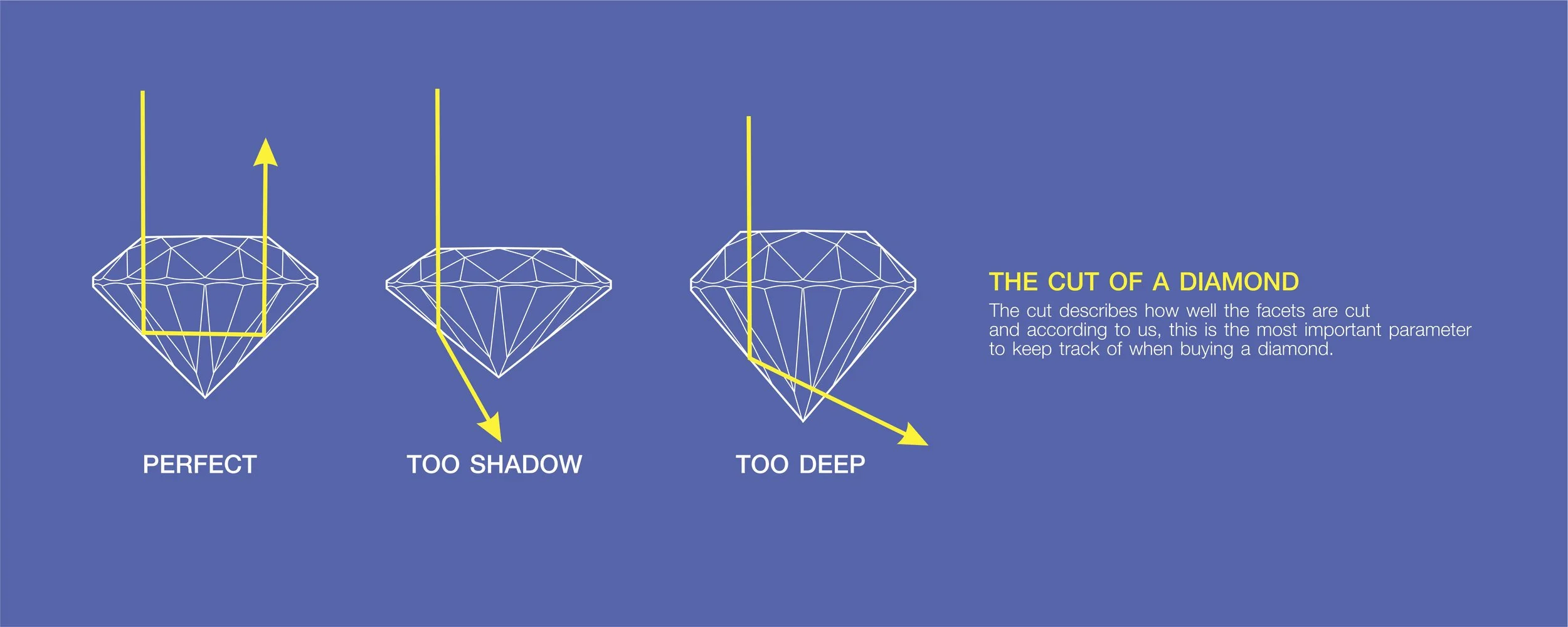
How Cut Affects Sparkle and Light Performance
A diamond's cut is what gives it that captivating sparkle, often referred to as brilliance and fire. When light enters a diamond, it should ideally reflect off the facets and bounce back out, creating that unmistakable sparkle. The better the cut, the more effectively light will be reflected, resulting in a bright and lively appearance.

Brilliance: This refers to the amount of white light reflected back from the diamond. A well-cut diamond will maximize brilliance, making it look bright and full of life.
Fire: This is the colorful light you see when the diamond moves. A high-quality cut will break up light into its spectral colors, creating flashes of rainbow-like brilliance.
Poorly Cut Diamonds: A poorly cut diamond will allow light to leak out from the sides or bottom, resulting in a stone that looks dull and lifeless. Even if a diamond has good color and clarity, a poor cut will compromise its overall beauty.
Helpful Tip: Always prioritize cut quality over carat weight or clarity. A smaller diamond with a great cut will outshine a larger, poorly cut diamond every time.
Understanding Depth and Table Percentages
To understand diamond cut quality more deeply, it helps to know about depth and table percentages. These measurements determine how well a diamond is proportioned, which directly impacts its sparkle.
Table Percentage: The table is the flat surface on the top of the diamond. The table percentage is calculated by dividing the width of the table by the width of the diamond. Ideally, this percentage should be between 53-58% for round diamonds. A well-proportioned table helps ensure that the diamond captures and reflects light beautifully.
Depth Percentage: The depth of a diamond is the distance from the table to the culet (the bottom point of the diamond). The depth percentage is the depth divided by the diamond's width. For round diamonds, a depth percentage between 59-62% is considered ideal. A diamond with too much or too little depth will allow light to escape, reducing its sparkle.
Balancing Table and Depth: A diamond with ideal depth and table percentages will be well-proportioned, which means it will have maximum brilliance and fire. If the table is too large or the depth too shallow, the diamond may not reflect light properly, resulting in a less dazzling appearance.
Helpful Tip: When evaluating a diamond’s cut, don’t be afraid to ask your jeweler about the depth and table percentages. These numbers can help you understand if the diamond is proportioned correctly for optimal sparkle.
Choosing the Best Cut for You
When choosing a diamond, remember that the cut is the most important factor influencing its beauty. Even if you’re on a budget, prioritizing cut quality will ensure that your diamond sparkles beautifully, regardless of its size or clarity. Idealand excellent cuts are your best bet if you want a diamond that truly dazzles, while understanding depth and table percentages can help you make sure you’re getting a well-proportioned stone.
Recommended Resource: Use tools like James Allen’s 360° Viewer to see how diamonds with different cuts reflect light. This can help you visualize the difference between ideal, excellent, and lower cut grades.
Understanding diamond cut quality will make a huge difference in finding a stone that stands out with brilliance and beauty. By prioritizing cut quality, you can ensure that your diamond sparkles as brightly as love itself.
Helpful Products and Resources
Diamond Cut Comparison Tool: Consider using an online comparison tool to evaluate different diamonds’ cut qualities. Many reputable online retailers offer these tools for free.
Expert Consultation: Retailers like Blue Nile and Brilliant Earth offer virtual consultations with gemologists who can help you understand diamond cuts and choose the best one for your budget.
